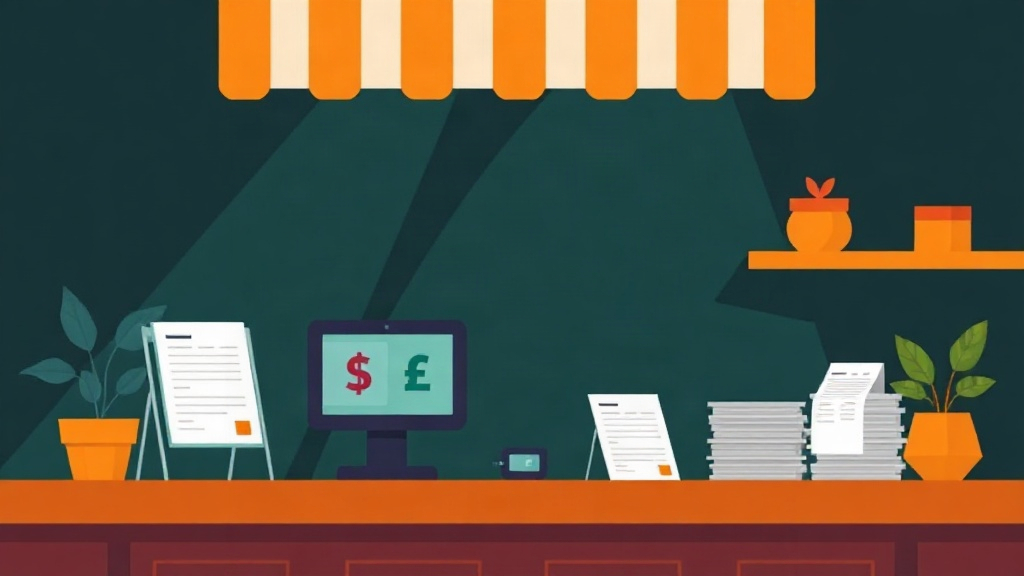
Subscription POS Pricing Is Spreading — What It Actually Means for a Shop Billed in a Weak Currency
We build Pultrack, a POS and inventory app for small retailers who work in two currencies at once, often with patchy internet. So when industry coverage says subscription pricing is "replacing large upfront software licenses" and making POS tools more accessible to small businesses, we read that claim the way a shop owner would: is this actually cheaper for me, or just cheaper to start?
What's actually changing in how POS is sold?
A recent roundup of POS trends for small retailers describes several shifts happening at once: cloud deployment becoming the default over on-premise servers, mobile point-of-sale spreading to pop-ups and floor staff, contactless and wallet payments becoming baseline expectations, and analytics or AI features being bundled in as add-ons [1]. The same piece notes that subscription pricing is displacing large upfront software licenses, which it frames as a way to make advanced tools more accessible to small businesses [1].
Separately, market-sizing research indicates that small and medium enterprises accounted for a majority of POS software revenue in 2025 and are expected to keep growing faster than the market overall [2]. Another report attributes SME growth in this category to demand for simple, affordable, easy-to-deploy transaction systems that replace manual billing books or legacy cash registers [3].
It's worth being direct about what kind of evidence this is: these are largely vendor blogs, market-research firms selling reports, and industry roundups, not independent audits of pricing behavior. The revenue-share figures are credible as market sizing, but the framing of subscription pricing as an unambiguous win for small retailers is an interpretation, not a measured outcome. We're treating it as a plausible industry direction worth examining critically, not a settled fact.
Why does "affordable" depend on which currency you're billed in?
Here the sourcing runs out, so this section is our own reasoning, not a cited claim. A subscription quoted in US dollars is a fixed cost in dollars — but very few small retailers in emerging markets earn in dollars. If a shop's revenue is in a currency that depreciates against the dollar over a year, the dollar-denominated subscription effectively gets more expensive in local-currency terms even though the sticker price hasn't moved. A shop owner budgeting based on last year's subscription cost, converted at last year's exchange rate, can be caught off guard when the same invoice consumes a larger share of monthly revenue. This isn't unique to POS software — it's true of any dollar-billed SaaS tool. But it matters more for point-of-sale specifically because POS is not optional infrastructure a shop can cancel mid-year without disrupting checkout, inventory records, and payment processing all at once. That makes the switching cost asymmetric: raising local-currency prices to absorb a subscription increase is easier to reason about than replacing the system that runs your till.
What should a small shop actually check before signing up?
Again, this list reflects our own operating judgment as a POS vendor, not a sourced finding. Based on how subscription and per-terminal pricing tends to work across software categories generally, questions worth asking a vendor include:
- Is the subscription price fixed in your local currency, or does it float with an exchange rate you don't control?
- Does the price scale per terminal, per user, or per store — and how does that change as you add a second register or a second location?
- Which features are in the base tier versus gated behind an upsell (analytics, multi-location sync, loyalty programs)?
- What happens to your sales history and inventory records if you stop paying — can you export them, or are they locked in?
- Does the system keep working if your connection drops, or does a missed payment or lost signal block checkout entirely?
None of these questions are answered in the trend coverage we're citing — they're the practical follow-ups a shop owner should bring to any vendor conversation, cloud-subscription or otherwise.
Is mobile and contactless payment support actually about convenience, or about staying compatible?
The same trend coverage notes that mobile POS is growing quickly among small stores and pop-ups that need checkout flexibility beyond a fixed counter, and that contactless and digital wallet payments have become baseline expectations that push retailers to upgrade older systems [1]. Read narrowly, that's a compatibility argument as much as a convenience one: a shop that can't accept a customer's preferred payment method loses the sale outright, regardless of how good its inventory tracking is. That's a lower bar to clear than "AI-powered forecasting," and it's worth small retailers prioritizing accordingly — payment compatibility first, analytics second.
Is subscription pricing actually a sign of maturity, or just a different bill?
The honest answer is: it depends on what a shop is comparing it to. Against a legacy on-premise system with a large upfront license fee and expensive in-person support contracts, a modest monthly subscription genuinely lowers the barrier to entry — that part of the industry framing holds up [1][3]. Against a shop's actual monthly cash flow in a volatile currency, a subscription is a recurring exposure that a one-time purchase never was. Both things can be true simultaneously, and small retailers are better served treating "subscription" as a pricing structure to interrogate rather than a feature to celebrate.
For a shop that runs on two currencies — say, pricing in local currency but reporting or reconciling against a harder currency — this is exactly the kind of recurring cost that deserves the same scrutiny as rent or supplier invoices: quoted in which currency, adjustable how often, and cancellable under what terms. That's the lens we'd encourage any small retailer to apply before treating "we moved to subscription pricing" as a straightforward upgrade.