Unified Commerce Is Here — But Does a Small Shop Actually Need All of It?
We build Pultrack, a point-of-sale and inventory app for small retailers in emerging markets, so we spend a lot of time reading POS market research — not because the forecasts matter much to a shopkeeper, but because the language in them eventually shows up in sales pitches aimed at that same shopkeeper. The newest language is "unified commerce," and it's worth unpacking before anyone adds it to a pricing tier.
What does "unified commerce" actually mean?
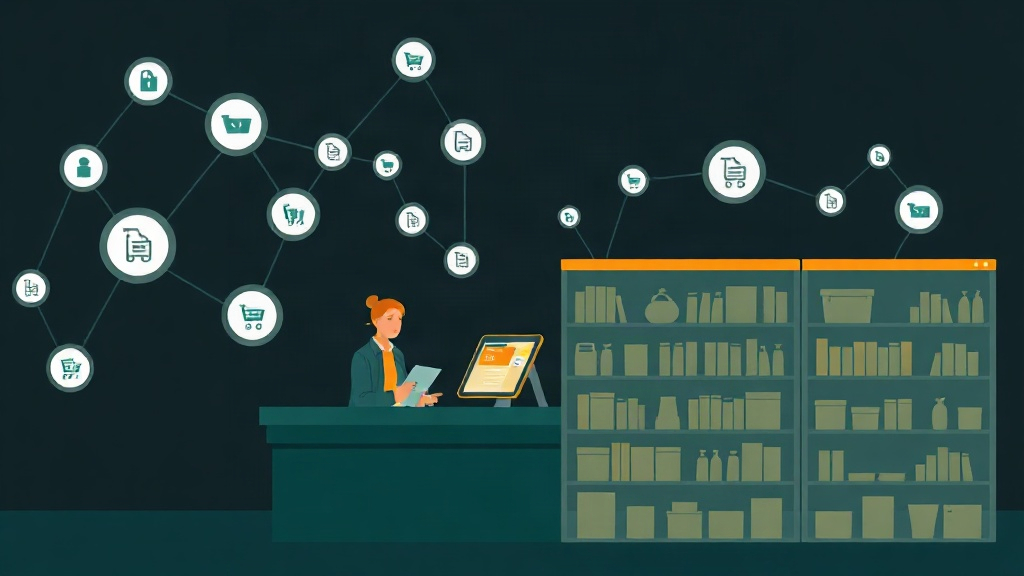
Industry analysts now describe cloud-based POS as leading the market, with small and medium-sized businesses forming the largest customer segment, pushed along by subscription pricing, mobile checkout, embedded payments, and AI-powered customer engagement [1]. The framing has shifted from "a better cash register" to something closer to a retail operating system: one login that's supposed to show stock, online orders, in-store sales, promotions, and customer history all in the same place, with features like buy-online-pick-up-in-store and unified returns folded in [1]. That's a real category shift in how vendors build and market these platforms. It is not the same as saying every small shop needs every piece of it.
Which parts of this are genuinely new for a small shop?
Three things in this wave are worth taking seriously, even for a one-register shop:
- Subscription pricing lowers the entry cost. A shop no longer needs to buy a server or a proprietary terminal outright; it pays monthly for software that used to require real IT investment [1].
- Embedded payments reduce reconciliation friction. When card and mobile money processing live inside the same app that tracks inventory, a shopkeeper spends less time cross-checking a separate payment terminal's batch report against the till tape.
- Basic loyalty and customer data are now standard, not custom-built. A shop with a few hundred regulars can track repeat purchases without hiring anyone or building a spreadsheet.
These are the parts of "unified commerce" that scale down well. They work whether a shop has one register or five, because they're about collapsing steps the shopkeeper was already doing manually.
Which parts are really built for chains?
The parts of this narrative that lean hardest on e-commerce — buy-online-pick-up-in-store, synchronized online/offline returns, omnichannel promotions — assume a retailer already runs a website or app alongside a physical store [1]. That's a real need for a regional chain with ten locations and a delivery arm. It's a much smaller need for a neighborhood shop whose "channel" is the people who walk past the counter. Paying for software that's architected around syncing a website catalog with in-store stock doesn't help a shop that has no website. If a vendor's pitch leads with omnichannel inventory orchestration before it mentions basic offline reliability or simple stock counts, that's a signal the product was designed for a bigger business than yours — and the price tag usually reflects that design, even if your shop only uses a fraction of it.
How should a small retailer evaluate a "unified" POS pitch?
A few practical questions cut through the marketing fast:
- Does the "unified view of customers, inventory, and sales" actually require you to run an online store, or does it work the same for a purely in-person shop?
- Is the AI-powered customer engagement feature something you'll configure and use weekly, or is it a checkbox on a features list that sounds impressive in a demo?
- If you strip out e-commerce sync and loyalty automation, does the core checkout-and-inventory workflow still feel fast and reliable on your actual internet connection?
- What's the monthly cost difference between the "basic" and "unified commerce" tier, and can you name three ways the extra tier pays for itself in your specific shop?
If a vendor can't answer the last question concretely, the feature is there to justify a higher subscription price, not to solve a problem the shop actually has.
Why does this matter more for shops in weaker currencies or patchy connectivity?
Unified commerce platforms are, almost by design, built around constant connectivity — syncing online orders, web catalogs, and in-store stock in near real time. A shop that loses signal for stretches of the day, or that transacts in a currency that moves against the dollar week to week, needs the reliability fundamentals solved first: can the till still ring up a sale with no connection, and does the software handle local-currency pricing without forcing awkward conversions. A long features list about omnichannel syncing is irrelevant if the basic sale doesn't go through at 6pm when the network drops.
Where does Pultrack fit into this shift?
We watch this market move toward "unified commerce" with some caution, because we built Pultrack for the shop that doesn't have a website to unify with. Our starting point was never "how do we connect online and offline channels" — it was "how do we make sure a shop with one till, a patchy connection, and prices quoted in two currencies can close out the day accurately." We'd rather a small retailer get rock-solid offline checkout, simple dual-currency reporting, and inventory counts that actually match the shelf, than a dashboard that promises omnichannel orchestration it will never use. The bigger platforms chasing the unified-commerce story are solving a real problem — for retailers who already have multiple channels to unify. Most of the shops we work with are solving a different, earlier problem: making one channel work reliably.
What should a shopkeeper actually do with this trend?
Treat "unified commerce" as a label to interrogate, not a feature to chase. Ask any POS vendor to show you, concretely, which features in their unified tier apply to a shop with no e-commerce arm. Keep the evaluation grounded in your own operations: how many registers, how reliable is your connection, do you sell in one currency or two, how many SKUs do you actually track. The market is genuinely moving toward giving small retailers tools that used to be exclusive to large chains [1] — but the way to benefit from that shift is to buy the pieces that match your shop's actual size, not the pieces that match the market research category.