

Offline-First POS: Why "It Works Without Internet" Is Becoming the Default, Not a Feature
A growing body of implementation writeups and vendor guides now frames offline-first as the standard architecture for point-of-sale, not a niche add-on: transactions process locally first, and the cloud is treated as a sync layer rather than a dependency. For small shops in emerging markets with unstable power and connectivity, this matters more than almost any other POS design choice — but the supporting material is mostly vendor and practitioner blogs, so treat "trend" claims with appropriate caution.
Read →
RFID, IoT Sensors, and AI Forecasting: Which "Next-Gen" Inventory Tech Actually Fits a Small Shop?
Vendor and industry write-ups are describing a shift from barcode-only stock tracking toward RFID, IoT sensors, AI-assisted forecasting, and warehouse robotics. Most of this coverage is written for warehouses and multi-site retailers, not single-till shops. We build Pultrack, a POS for small retailers, so here's a grounded look at which pieces of this "next-gen" inventory stack are realistic for a corner store today — and which are years away from mattering.
Read →
POS Platforms Are Quietly Becoming "Fintech Lite" — What That Means Before You Say Yes to Embedded Finance
Some POS vendors are starting to bundle financial extras — like invoicing, payouts, or lending-style offers — alongside checkout and inventory tools. For a small shop, that convenience comes with real questions about fees, contracts, and who's actually extending the credit. We build Pultrack, offline-first POS software for small retailers, so we watch this shift carefully — and think shop owners should read the fine print before treating their POS as a bank.
Read →
Big ERP Vendors Are Chasing "Vertical AI Modules" — What That Actually Means for a Single-Till Shop
Global ERP research says the next wave of innovation is cloud-native, AI-embedded, and increasingly "vertical" — built for specific industries rather than one-size-fits-all suites. That's real, but it's a story about enterprise software budgets, not about the shop with one register and a fridge of cold drinks. We break down what "vertical-focused" and "AI-embedded" actually mean, and why the gap between enterprise ERP innovation and small-shop tools is more about scale of decision-making than shared technology.
Read →
Why the Exchange Rate You Price At Isn't the Exchange Rate You Should Report At
Displaying prices in two currencies is a pricing choice, not an accounting rule. Whether you're legally required to restate your books for inflation depends on one thing: whether your functional currency sits in a hyperinflationary economy under IAS 29. New research on Zimbabwean retailers shows dual exchange-rate regimes and fast depreciation squeeze formal shops harder than informal ones — which is exactly why the pricing layer and the reporting layer need to be tracked separately, not treated as the same problem.
Read →
POS "AI Recommendations" Are Here — But Can They Actually Restock a Small Shop?
Recent POS market reports describe AI moving directly into point-of-sale software for inventory suggestions, fraud checks, and personalization, not just as bolt-on analytics. We build Pultrack, a POS for small offline-first shops, so we looked past the marketing language to ask a narrower question: can these AI features actually help a one- or two-register shop decide what to reorder, or are they built for chains with data these shops don't generate?
Read →
Offline-First POS Hype vs. Hardware Reality: What Small Shops Should Actually Check
A wave of vendor blogs and sponsored posts now call "offline-first" the default POS architecture for emerging-market shops — but most of that evidence is marketing, not independent data. The underlying engineering pattern (local writes, queued transactions, deferred sync) is real and well documented, yet claims about battery life, low-end hardware performance, and connectivity behavior are rarely backed by testing. We build Pultrack, a POS for small shops, so we read this material closely — and the honest answer is: ask for proof, not adjectives.
Read →
Why Retailers Chasing Parallel-Market FX Sometimes Raise Prices Before They Have To
A 2026 study on food retail pricing in a volatile, multicurrency market finds that when shops source foreign exchange from a parallel market, they can raise prices ahead of actual cost increases — because they're pricing in expected currency depreciation, not just today's costs. This is a pricing-behavior finding, not a new accounting rule, but it explains why many small shops already anchor prices to a stable currency. We build Pultrack, offline-first dual-currency POS software for small shops, so we read studies like this closely — and we'll flag clearly where the evidence is thin.
Read →
The Global M&A Wave in Inventory Software: Why Consolidation Doesn't Trickle Down to Corner Shops
Big inventory software players are buying each other and bundling features — Fishbowl acquired Repfabric, Xero rolled out a multi-location inventory tier, and Wolters Kluwer launched a new cloud tool for Italian SMEs. This is real consolidation, but it's aimed at manufacturers, distributors, and accounting-firm clients — not the one-till shop counting stock by hand. We break down what's actually happening and why a small retailer shouldn't wait for these platforms to "trickle down."
Read →
Unified Commerce vs. Buzzwords: What "Unified Commerce" Actually Means for a One-Register Shop
POS vendors now market "unified commerce" — one system tying together checkout, inventory, loyalty, and online orders. The trend is real, but most of the coverage describing it is vendor blogs and market-research summaries, not independent reporting. For a single-location shop with one till and a phone-based catalog, the useful question isn't "do I need unified commerce" — it's which two or three connections (payments, stock, customer record) actually save time today.
Read →
Offline-First POS: Who Actually Owns Your Sales Data When the Device Is the System of Record?
Offline-first POS makes the device the primary system of record, which is great for uptime but raises a question vendors rarely spell out: when your sales, inventory, and customer data live on-device before syncing to the cloud, who owns that data, can you export it, and what happens if you switch providers? We build Pultrack, a POS for small shops, so we dig into what the offline-first architecture trend actually implies for data rights — not just sync mechanics.
Read →
Receipts Across Borders: What Different Countries Actually Require Small Shops to Print
Receipt rules vary sharply by country, but the underlying logic is the same: tax authorities want proof of what was sold, when, by whom, and how much tax was collected. We build Pultrack, offline-first POS for small shops running dual currencies, so we track these rules closely. This post walks through what the Philippines, the US, and Australia actually require on a printed receipt, and what that means for a shop owner choosing or configuring a printer.
Read →
When Does a Hyperinflation Economy Actually Force New Accounting Rules? A Guide for Retailers
Dual-currency tracking and inflation accounting solve different problems: one is a systems design choice for running a shop in two currencies, the other is a financial reporting rule (IAS 29 or ASC 830) triggered when a country's inflation crosses recognized thresholds. Small retailers often need both, but having a dual-currency POS does not, by itself, satisfy inflation-adjusted reporting requirements. This post walks through what actually triggers the accounting rules, what gets restated, and what that means for a shop's day-to-day books.
Read →
Slow-Moving Stock, Not Just Low Stock: What the Latest Inventory Software Wave Misses for Corner Shops
A cluster of recent launches — Xero's new inventory add-on, Wolters Kluwer's Genya Magazzino for Italian SMEs, and Fishbowl's acquisition of a CRM/commissions platform — shows vendors bundling inventory into bigger "back-office" systems. We build Pultrack, a POS for small shops, so we read these announcements with one question: does any of this help a shop owner who counts stock by hand and sells in two currencies? Mostly, not directly — but the underlying problem they're chasing (slow-moving stock tying up cash) is real and worth unpacking on its own terms, without borrowing numbers we can't verify.
Read →
Contactless Payments and Line-Busting: Why Checkout Speed Is the Real POS Battleground
Industry reports keep flagging mobile/tablet checkout and contactless payments as top POS trends for small retailers. We build Pultrack, a POS for small shops, so we looked past the buzzwords at what actually changes at the counter: fewer queues, faster tap-to-pay, and staff who can ring up a sale anywhere in the store. Here's what's real for a small shop, what's marketing gloss, and what to check before you switch.
Read →
What Happens During Sync? The Hidden Moment That Makes or Breaks Offline POS
Offline-first POS is well established as an architecture, but the riskiest moment for a small shop isn't when the internet drops — it's the reconciliation that happens when it comes back. Conflict resolution, duplicate sales, and stock mismatches during sync deserve as much attention as offline capability itself.
Read →
Fiscal Printers and Audit Trails: What Small Shops Should Actually Ask Before Buying
Receipt printers are increasingly marketed as compliance tools, not just paper-spitting hardware — some countries legally require registered or "fiscal" devices, others don't. Because the rules differ sharply by country (Philippines' Authority to Print, Denmark's SKAT-approved registers, Taiwan's cash register regulations, California's receipt rules, Australia's proof-of-purchase norms), shop owners should treat printer choice as a legal question first, hardware question second — and be skeptical of vendor claims that a printer alone "guarantees" compliance.
Read →
Why Your Corner Store's "Books" Break Down During Inflation — Even With Two Currencies on the Shelf
Showing prices in local currency and dollars (or euros) on your shelf tags is a pricing tactic, not an accounting fix. Inflation accounting — how you value inventory, cost of sales, and monetary balances — is a separate problem that IFRS (IAS 29) and US GAAP (ASC 830) solve differently, and neither was written with a single corner shop in mind. We build Pultrack, a POS for small shops, so we look at how these rules actually translate to a shopkeeper's daily reality.
Read →
Software Is Consolidating Around Inventory — What That Means If You Run One Small Shop, Not a Distribution Network
Big inventory software players are merging features — sales, CRM, and stock tracking into one tool — while marketplaces like Amazon India push AI restock suggestions to sellers. That consolidation trend is aimed mostly at distributors and larger sellers, not single-till corner shops. We build Pultrack, a POS for small shops, and the lesson we take from this news isn't "buy a bigger suite" — it's "make sure your one tool covers sales and stock together, without needing five subscriptions."
Read →
Vertical POS vs. Generic Software: Why "Retail-First" Beats "Do-Everything" for Small Shops
Industry trend reports for 2026 highlight "vertical specialization" — retail-first POS systems outperforming generic, one-size-fits-all software for small business use cases. We build Pultrack, a POS for small shops in emerging markets, and this matches what we see: shop owners don't need every feature under the sun, they need the handful that match how their specific shop actually sells and restocks.
Read →
Is Your Receipt Legally Valid? What Small Shops Get Wrong About Tax-Compliant Printing
Across many countries, the humble printed receipt is a legal document, not just a courtesy — tax authorities often require specific fields, authorized printers, and retention periods. We build Pultrack, offline-first POS software for small shops, so we spend a lot of time thinking about what actually has to be on that slip of paper. This post breaks down what's genuinely a legal requirement versus what's just good practice, using the Philippines, Taiwan, Australia, and US recordkeeping rules as concrete examples — and flags where our sources are vendor content rather than official guidance.
Read →
Dual Currency vs. Inflation Accounting: What Small Shops Actually Need to Track
Dual-currency bookkeeping (recording sales in local money plus a stable currency) and inflation accounting (formally restating financial statements under standards like IAS 29) solve different problems. Most small shops in volatile economies need the first every day; only larger, formally audited businesses in hyperinflationary economies are required to do the second. Confusing the two — or assuming one substitutes for the other — is where shopkeepers and bookkeepers get into trouble.
Read →
Embedded Payments and Financial Tools: The Next POS Layer Small Shops Need to Understand
POS vendors are increasingly bundling payouts, invoicing, and lending features directly into checkout software, not just processing sales. For small shop owners in emerging markets, this "embedded finance" layer can be genuinely useful — but it also raises questions about fees, currency handling, and who controls your cash flow data. We build Pultrack, a POS for small shops, so we look at what's substance versus sales pitch.
Read →
AI, Spreadsheets, and the Inventory Gap: What SMB Data Actually Shows Small Shops
New industry surveys show a widening gap between demand for AI-driven inventory tools and actual use: most small businesses still run stock counts on spreadsheets, even as vendors report growing adoption and consolidation in the software market. We build Pultrack, a POS for small shops, so we read these numbers carefully — and separate what's independently verified from what's vendor marketing.
Read →
Cloud, Mobile, and Subscription Pricing: What the "New" POS Trends Actually Cost a Small Shop
Industry reports agree small retailers are moving toward cloud-based, mobile-first POS with subscription pricing instead of upfront licenses. We build Pultrack, a POS for small shops in emerging markets, so we read these trend pieces with a practical question: do "cloud-first" and "subscription-first" actually help a shop with patchy internet and thin margins, or do they just shift risk onto the owner?
Read →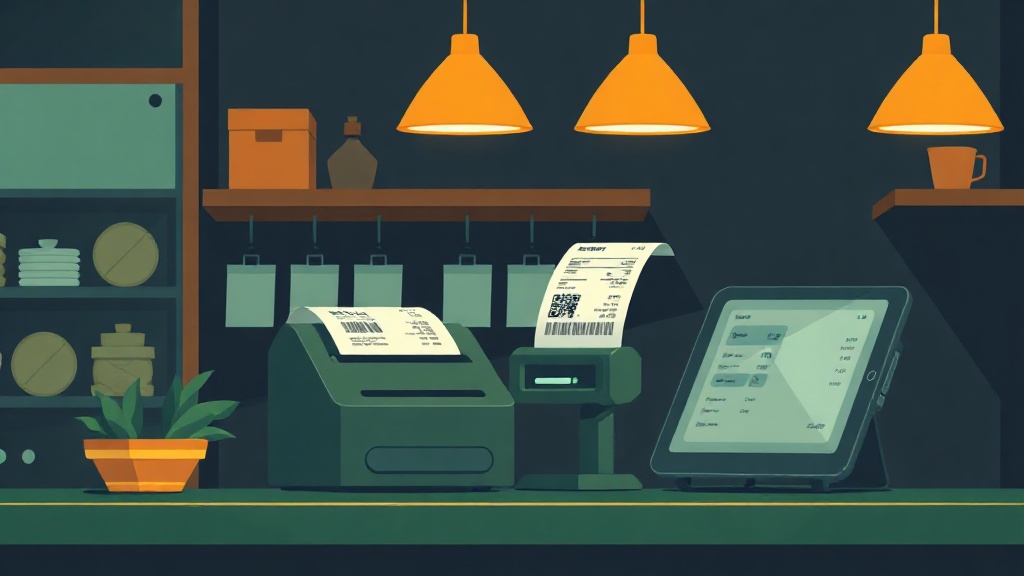
Receipts Aren't Just Paper: What Small Shops Need to Know About Tax-Compliant Printing in 2026
A working thermal printer doesn't make a shop tax-compliant — the software behind it does. Receipts need the right legally required fields (tax ID, sequential numbering, tax breakdown, sometimes QR codes), and rules on when a receipt is mandatory vary by country. We build Pultrack, a POS for small shops, so we dug into what's actually changing and what owners should check first.
Read →
AI Inventory Tools Are Going Mainstream for Small Shops — But Does That Match How Corner Stores Actually Run?
New data from Netstock shows small and midsize businesses are moving past "trying out AI" into actually using it for daily inventory planning — 48% now use AI in inventory/supply chain work, and the company posted 29% growth in 2025 largely on the back of that shift. Xero also just launched a dedicated inventory product for small goods businesses. We build Pultrack, a dual-currency, offline-first POS for small retailers, so we read this news against a harder question: does AI-driven forecasting actually work when a shop has patchy internet, cash-and-mobile-money sales, and a shopkeeper who restocks by gut feel? Short answer: the direction is right, but the tools need to fit the shop, not the other way around.
Read →
POS Software Trends 2026: What They Really Mean for Small Shops
Cloud POS, mobile checkout, omnichannel inventory, contactless payments, and light AI features are converging into what vendors call a "connected retail operating system." For small shops in emerging markets, though, the trend that matters most is quieter: offline resilience and dual-currency handling, which most global POS roundups barely mention.
Read →
Offline-First POS: Why "Local by Default" Is the Right Architecture for Small Shops
A cluster of recent technical write-ups on offline-first point-of-sale systems describes the same shift: treat the local device as the system of record, and treat cloud sync as an optional, automatic background task rather than a requirement for every sale. For small retailers in emerging markets, that architectural choice is the difference between staying open during an outage and turning customers away. We build Pultrack, a POS for small shops, so we read this material closely — and we think the pattern is sound engineering, even though much of the public writing on it is still practitioner blogs and hobby project write-ups rather than independent research.
Read →